Why the History of Racial Injustice Still Matters in Understanding Modern Justice Systems
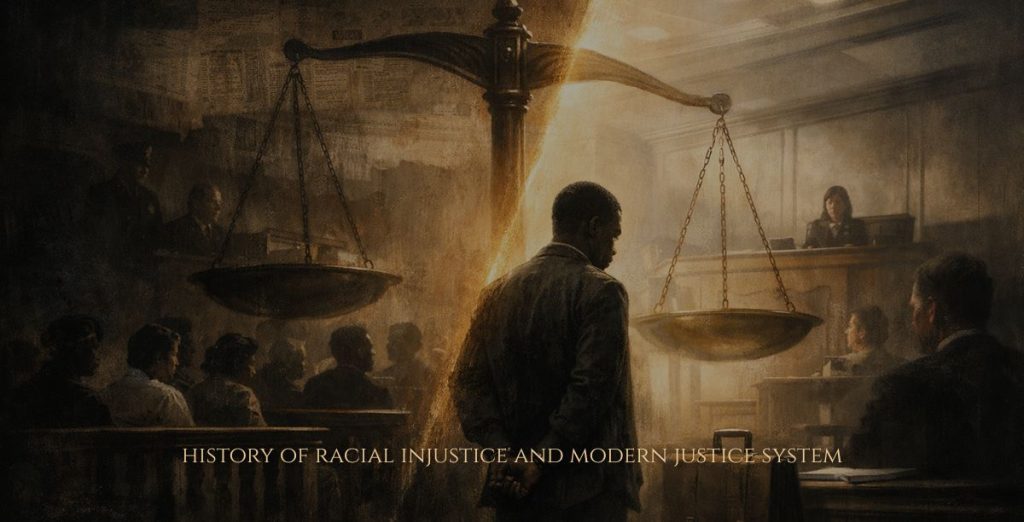
When people talk about justice today, the focus is usually on what’s happening right now new laws, recent cases, or ongoing debates. But the system we see today didn’t come out of nowhere. It’s the result of years of decisions, beliefs, and practices that still shape how things work.
That’s why the history of racial injustice still matters. It helps explain why certain patterns haven’t fully disappeared, why trust in the system isn’t the same for everyone, and why fairness can sometimes feel out of reach.
Stories that reflect these realities, like Black vs White: A Journey Through the Shadows of the Mind by Susan Ogden Benting and Takezo Art, show how justice has been influenced by more than just facts and evidence. They remind us that the past still has a voice in the present.
Where It All Started
To understand today’s justice system, you have to look at where it came from. In earlier decades, especially in parts of the American South, the legal system was closely tied to social attitudes.
Segregation wasn’t just about separate schools or public spaces. It shaped institutions, including courts and law enforcement. In many cases, race affected how people were treated before a trial even began.
This is where the connection between past racial injustice and modern justice system becomes clear. Even when laws change, the mindset behind them can take much longer to shift.
The Reality of the 1950s
The 1950s are often remembered as a time of growth, but for many, it was also a time of deep inequality. The justice system didn’t always work the same way for everyone.
For Black individuals, being accused of a crime could be enough to change everything. Bias, fear, and social pressure often influenced decisions, sometimes more than the truth itself.
The effects of racial injustice in 1950s America and its impact today are still visible. Families passed down stories of unfair treatment, and those experiences shaped how later generations view the system.
That history doesn’t just disappear. It stays in memory, in perspective, and in the way, people respond to authority even now.
Bias Doesn’t Just Vanish
A lot has improved over time, but bias doesn’t simply go away. It changes form. Sometimes it becomes less obvious, but it can still affect outcomes.
Today, discussions about racial bias in the justice system then and now often focus on things like sentencing differences, policing practices, and access to legal support. Even when laws are designed to be fair, results don’t always reflect that.
Progress is real, but so is the need to keep improving. History shows that without awareness and accountability, systems can easily lean toward inequality again.
Lessons We Can’t Ignore
There are important lessons from historical racial injustice cases that still apply today.
One of the biggest lessons is how power can influence outcomes. When authority isn’t questioned, it can lead to decisions that go unchallenged, even when they should be.
Another lesson is the importance of proper legal support. People without strong representation have always been at a disadvantage, and that hasn’t completely changed.
Then there’s silence. In many past cases, people knew something wasn’t right but chose not to speak. That silence allowed injustice to continue longer than it should have.
These lessons aren’t just history. They’re reminders of what to pay attention to now.
The Past Is Still Part of the Present
It’s easy to think of history as something separate, but it’s not. The justice system today is built on what came before it.
The connection between past racial injustice and modern justice system shows up in both obvious and subtle ways. Policies, procedures, and even public attitudes still carry traces of earlier times.
When people question fairness in trials or raise concerns about equal treatment, they’re often responding to patterns that have existed for years.
Understanding that connection makes it easier to see why these issues still matter.
Why It Still Matters Today
So why does the history of racial injustice still matter today?
Because without it, the present doesn’t fully make sense. It becomes harder to understand why certain challenges continue or why trust in the system varies so much.
History gives context. It helps explain patterns and shows why change takes time.
This is especially important when discussing issues like Social justice and wrongful convictions, where past mistakes continue to influence how people think about fairness and reform today. Looking back helps identify what went wrong and how similar problems can be avoided.
Moving Forward with Awareness
Recognizing the past isn’t about holding onto it. It’s about learning from it.
Modern justice systems have the opportunity to improve by understanding earlier failures. Efforts like better representation, more transparency, and stronger accountability all come from that awareness.
Change doesn’t happen overnight. It happens step by step, often because people are willing to question what already exists.
Writers like Susan Ogden Benting, Takezo Art help bring these ideas to life through storytelling. By showing the human side of injustice, they make these issues easier to understand and harder to ignore.
Final Thoughts
The past isn’t as distant as it seems. The history of racial injustice still shapes how justice is understood and experienced today.
Looking back isn’t about staying stuck in old stories. It’s about gaining a clearer view of the present. It helps explain why fairness is still something we work toward, not something we can assume is already there.
At the same time, it shows that change is possible. Systems can improve, but only when people are willing to face what went wrong and take it seriously.
In the end, understanding history gives us something valuable: perspective. And with that perspective, we have a better chance of building a system that treats everyone with fairness, consistency, and respect.