Social Justice and Wrongful Convictions: What History Teaches Us About Bias and Power
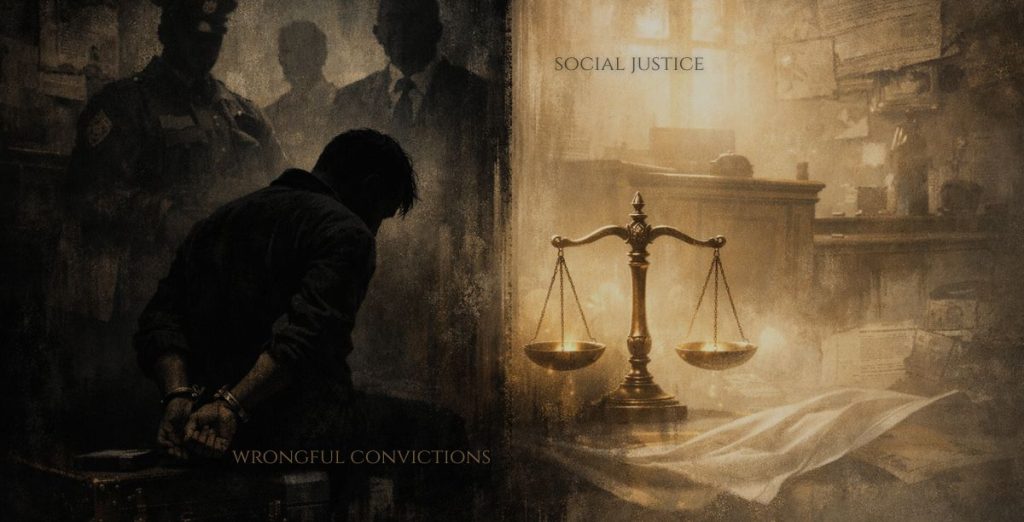
Justice is supposed to be simple. The truth is found, the innocent is protected, and the guilty are held accountable. But history tells a different story. There have been many moments when truth was overlooked, and decisions were shaped by bias, pressure, or power.
This is where the conversation around social justice and wrongful convictions becomes important. It’s not just about a few cases from the past. It’s about understanding how and why systems fail, and what those failures can teach us today.
Stories like Black vs White: A Journey Through the Shadows of the Mind by Susan Ogden Benting, Takezo Art bring these realities closer to home. They show how injustice can unfold quietly, and how its impact stays long after the moment has passed.
What Do We Mean by Social Justice and Wrongful Convictions?
Social justice is about fairness. It means every person should be treated equally, no matter who they are or where they come from.
Wrongful convictions happen when that fairness breaks down. Someone is found guilty of a crime they didn’t commit, often because of flawed evidence, pressure during investigations, or assumptions that were never questioned.
Looking at social justice and wrongful convictions in history, it becomes clear that these are not just random errors. In many cases, they are tied to deeper issues within the system itself.
How Bias Shapes Outcomes
Bias doesn’t always show up in obvious ways. Sometimes it works quietly, influencing decisions without people even realizing it.
In the past, race often played a major role. It affected who was suspected, who was believed, and how cases were handled. Instead of focusing only on facts, decisions were sometimes shaped by perception.
This is a clear example of how bias leads to wrongful convictions. When assumptions take the place of evidence, the chances of getting it wrong increase.
Even today, conversations about fairness often come back to this issue. While progress has been made, bias hasn’t completely disappeared.
What History Shows Us About Injustice
When we look back at past cases, certain patterns stand out. Authority was sometimes trusted without question. People stayed silent out of fear. And those who needed to be heard the most were often ignored.
This is what history reveals about injustice. It shows that wrongful convictions are rarely caused by a single mistake. They are usually the result of several things going wrong at once.
It also shows how difficult it can be to fix those mistakes later. In many cases, the truth takes years to come out, and by then, the damage has already been done.
The Role of Race in Past Cases
One of the hardest truths to face is how much race has influenced legal outcomes.
There were times when being part of a certain group made someone more likely to be accused and less likely to be believed. Evidence didn’t always matter as much as it should have.
Understanding how race influenced wrongful convictions in the past helps explain why trust in the system still varies today. These experiences were not isolated. They affected families and communities in lasting ways.
Why Social Justice Still Matters
If history has shown anything, it’s that justice doesn’t work properly without fairness. It needs to be protected and questioned at the same time.
That’s why social justice matters in legal systems is still such an important topic. Without it, the system risks repeating the same mistakes.
Efforts to improve the justice system like better legal support, clearer processes, and more accountability often come from recognizing where things went wrong before.
Social justice isn’t just a concept. It’s what helps keep the system balanced.
Connecting It to a Bigger Picture
Wrongful convictions are not separate from the larger story. They are part of a broader pattern that has shaped the justice system over time.
When we look at these cases alongside the History of Racial Injustice, it becomes easier to see how deep these issues run. They didn’t start with one case, and they don’t end with one solution.
Understanding this bigger picture helps shift the focus from individual mistakes to the system as a whole.
Learning from the Past
History offers something valuable: perspective. It shows us what went wrong and why.
In many past cases, issues like forced confessions, weak legal defense, or outside pressure played a role. Recognizing these factors has helped bring changes to how cases are handled today.
But learning from history requires honesty. It means being willing to question things, even when it’s uncomfortable.
That’s how improvement starts.
The Human Impact
Behind every wrongful conviction is a real person. A life that was changed in ways that can’t be undone.
It’s easy to focus on systems and rules, but the real impact is personal. Years lost, families affected, and trust broken these are the consequences that matter most.
Stories written by Susan Ogden Benting, Takezo Art highlight this human side. They remind us that justice is not just about laws. It’s about people and the lives those laws affect.
Final Thoughts
The discussion around social justice and wrongful convictions is not just about looking back. It’s about understanding how the system works today and how it can improve.
History shows us that bias and power have influenced outcomes in ways that should not have happened. But it also shows that change is possible when people are willing to face those truths.
Looking back helps us recognize patterns, ask better questions, and avoid repeating the same mistakes. It gives us the awareness needed to move forward with more fairness and responsibility.
In the end, justice is not just about reaching a verdict. It’s about making sure that verdict is right for everyone.