How Perception Shapes the Way We Judge Other People
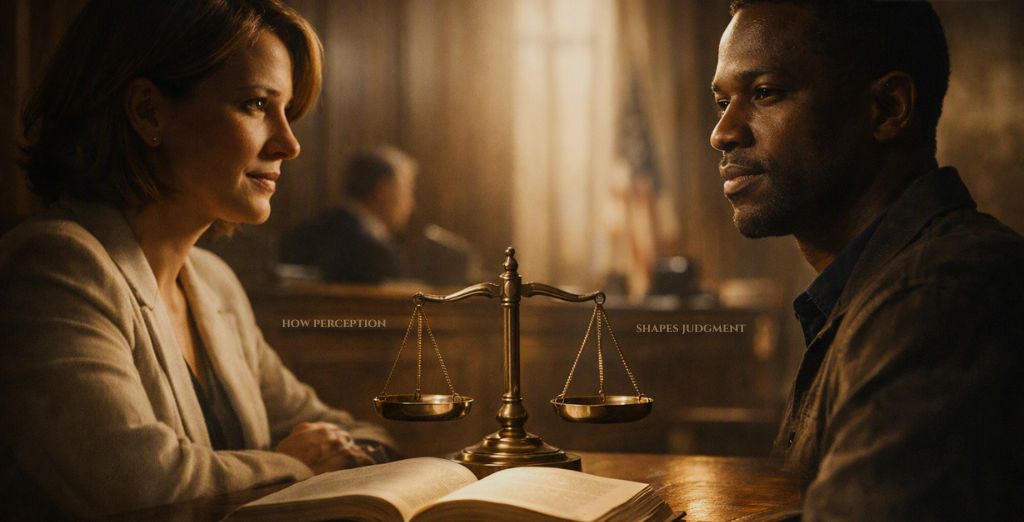
We judge people quickly. Most of the time, we do it without noticing.
When someone enters a room and speaks, we quickly start to form an opinion. Things like their clothes, accent, job, race, age, or confidence can shape our thoughts before we learn anything meaningful about them.
We might think we are just observing the situation, but often we fill in the gaps with our own assumptions.
This is how perception works. It helps us understand others, but it can also lead us away from the truth.
First Impressions Are Only a Starting Point
First impressions can be helpful. They let us react quickly and make sense of new situations. Problems arise when we treat that first reaction as the final word.
A quiet person might seem unfriendly when they are just nervous. Someone who speaks confidently might look honest even if they are hiding something. People with respected family names are often trusted more than those from less popular backgrounds.
None of these impressions tells us the full story.
People are complex. Their actions might be shaped by fear, grief, pressure, or experiences we do not know about. We cannot see all of this in just a few seconds.
We See People Through Our Own Experience
Nobody sees the world from a completely neutral position.
Our families teach us what to value and what to fear. Communities pass down ideas about who to trust. Painful experiences can make us careful, while good ones can make us more open.
That background follows us into every judgment we make.
Two people can watch the same event and see it in different ways. One might notice danger, while the other sees confusion. One person might trust an authority figure right away, while someone else has learned to ask questions.
This does not mean facts are unimportant. They matter. But we often see facts through our own experiences before deciding what they mean.
Realizing this helps us be more careful. It reminds us that our view can be honest but still incomplete.
Labels Make Judgment Easier, but Less Fair
Labels can save time, but they also hide who people really are.
When someone is called dangerous, poor, uneducated, privileged, guilty, or troublesome, everything they do can be seen through that label. Their real character starts to fade away.
This is how stereotypes become powerful. They turn a person into an idea before that person can speak for themselves.
History shows the damage this can cause. Race, class, religion, gender, and family background have all been used to decide who deserves trust and who does not. Those judgments have affected employment, education, personal relationships, and legal decisions.
The label can seem more real than the person right in front of us.
Certainty Can Prevent Us From Seeing the Truth
It feels comfortable to be certain. Once we decide what kind of person someone is, we stop asking questions.
But certainty can be risky if it comes too soon.
We might ignore details that run counter to our opinion. We might accept weak evidence just because it fits what we already believe. Sometimes, we even defend an unfair decision instead of admitting we were wrong at first.
That is why honest reflection is important. It makes us pause and consider a hard truth: maybe we do not know as much as we think.
Changing your mind is not a weakness. Sometimes, it is the best sign that you are really paying attention.
Perception Has Serious Consequences in the Justice System
If we misjudge someone in a social setting, it can cause embarrassment or hurt feelings. In a courtroom, a wrong judgment can take away someone’s freedom or even their life.
Police officers, witnesses, lawyers, judges, and jurors are all human. Their choices can be shaped by fear, social pressure, and assumptions about race or class.
A nervous person might look guilty. Someone who is grieving might seem distant. A person who has trouble explaining themselves might be seen as dishonest. At the same time, a confident person with status and influence might get trust they have not earned.
This is where perception meets justice and power. The people making decisions often have authority over those they judge. If assumptions are not questioned, that power can turn a wrong impression into a serious mistake.
Being fair means more than just following the rules. It means being willing to question the story that seems easiest to accept.
A Story About Judgment and Perspective
Black vs White: A Journey Through the Shadows of the Mind by Susan Ogden Benting looks at what happens when people are judged based on prejudice, fear, grief, and social status.
The story shows that judgment is not just an abstract idea. Its effects are personal. A young man is judged based on assumptions before the facts are clear. Respectable appearances protect the guilty, while background and race make it harder for others to be seen as innocent.
As the truth comes out, the characters have to face how much harm certainty has caused.
This is where the book’s main message stands out. Black and white by Susan Ogden Benting is not just about race. They also stand for the strict categories people use to separate guilt from innocence, good from bad, and one type of person from another.
Final Thoughts
We will never stop forming impressions. It is part of being human.
What we can do is be more honest about how limited our impressions are. We can ask for the evidence that supports our opinions. We can listen before making up our minds. We can notice when a label has replaced the real person.
It might help a relationship, stop an unfair judgment, or help us see a truth we would have missed.
People are not simple, and neither are their motives, fears, or choices. When we accept this, we are less likely to put them into fixed categories and more willing to see them as they truly are.