What Black vs. White Gets Right About an Unfair Trial
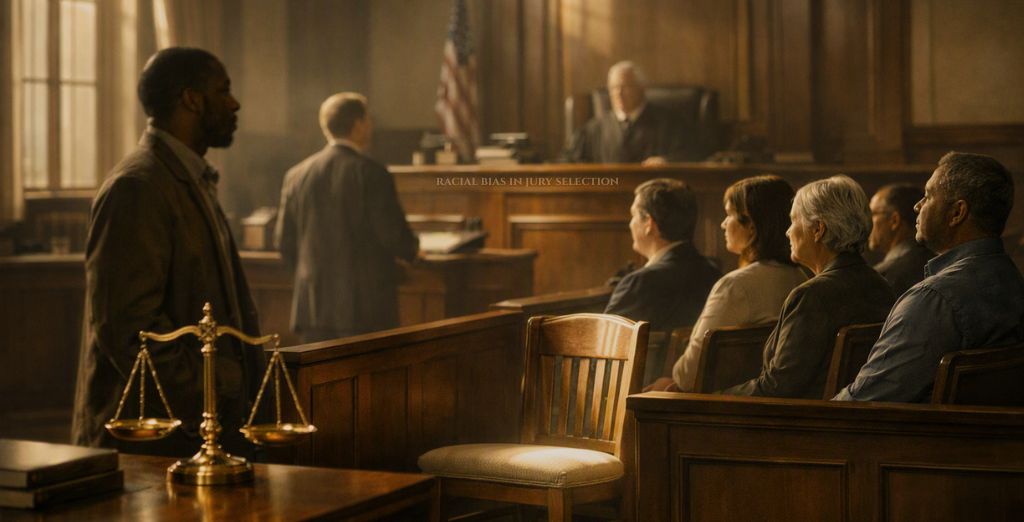
A fair trial relies not just on the evidence, but also on who is chosen to listen to it.
Jurors decide which witnesses to believe, how to interpret the facts, and whether the prosecution has proven its case. This makes jury selection a key part of any trial’s outcome.
If race influences who is chosen or left out, the process becomes unfair. This issue can start even before the trial begins.
What Jury Selection Is Meant to Do
Jury selection aims to find people who will listen closely and judge the case fairly.
Potential jurors answer questions about their background, beliefs, and experiences. Someone can be removed if there’s a clear reason they might not stay impartial.
The process is meant to protect both sides and to form a jury that fairly represents the community.
Problems arise when people are excluded based on assumptions tied to race.
How Racial Bias Can Enter the Process
Racial bias is not always obvious. It may appear through the questions lawyers ask, the reasons they give for dismissing jurors, or the way certain answers are judged.
A Black juror may be treated with more suspicion for expressing concerns about law enforcement. Another juror may give a similar answer and remain in the pool.
Someone might also be excluded because of where they live, how they talk, or their experiences with discrimination. These reasons may seem neutral, even if racial bias is behind the decision.
One exclusion might not seem important, but a pattern of them can affect the whole jury.
Why Representation is Important
A fair jury does not require every juror to have the same background as the defendant.
It does mean qualified people should not be excluded because of race.
Jurors with different experiences can notice different details in a case. One might understand why someone was afraid of the police, while another might wonder why certain evidence was accepted without more questions.
These different viewpoints are important when jurors talk things over.
A balanced jury is more likely to question assumptions instead of just accepting them.
How Bias Can Affect a Verdict
Jurors do not only review physical evidence. They also judge behavior.
They decide whether silence looks suspicious, whether fear seems genuine, and whether a witness can be trusted. Bias can influence all of these judgments.
A defendant who appears nervous may be seen as guilty. A frightened witness may be dismissed as unreliable. A police officer may be believed without enough scrutiny.
These risks grow when the case already involves poor legal help, public pressure, or racial bias.
The outcome might seem official, but that does not always mean the process was fair.
What the Book Shows About an Unfair Trial
In Black vs White: A Journey Through the Shadows of the Mind by Susan Ogden Benting, Eddy Grant enters a courtroom where the case against him has already been shaped by race, power, and assumption.
He is young, grieving, injured, and poorly defended. The trial moves quickly. Important questions are not asked. The jury returns with a guilty verdict after only a short time.
The story shows how a courtroom can follow procedure while still failing to deliver justice.
This problem is not just about one decision. It starts with the investigation, goes through the defense, and ends with the jury.
By the time the verdict comes out, prejudice may have already shaped the whole process.
The Link Between Justice and Power
Jury selection is also tied to justice and power. Lawyers and judges have the authority to decide who stays in the jury pool. They need to use that power carefully.
If one side can remove jurors because of hidden prejudice, the trial is no longer fair. The jury might look legitimate, but important voices are missing.
This weakens public trust.
People are less likely to trust the courts if they think some citizens are not allowed to take part fully.
Signs of an Unfair Jury Process
There are some warning signs that jury selection might not be fair:
- One racial group is repeatedly removed
- Similar answers are judged differently
- Lawyers rely on vague reasons for dismissals
- The final jury does not reflect the wider community
- Concerns about bias are ignored by the court
These signs do not mean every verdict is wrong, but they show why the process needs more attention.
How Courts Can Improve Fairness
Courts can help reduce bias by making jury selection more open.
Judges should look closely at why jurors are dismissed. Jury pools should include people from all parts of the community. Lawyers should also get training on hidden bias and fair questioning.
Keeping clear records can help spot patterns over time.
The goal is not to control the verdict, but to protect the fairness of the process.
A fair trial needs more than just rules written down. Those rules must be applied the same way every time.
Final Thoughts
As shown in a book about racism by Susan Ogden Benting, A jury helps decide if someone keeps their freedom, loses years of their life, or faces a tougher sentence.
That responsibility should never depend on race.
When qualified jurors are left out, the defendant loses some of the fairness the court should provide. The community also loses trust in the system.
A fair jury does not promise a perfect result, but it gives the truth a better chance to be heard. That is why jury selection is important. Justice starts before the trial, with the people chosen to listen.